Skip to content

Your English learning journey

Learn English Step by Step

Follow a clear path from beginner to advanced. Learn with practical lessons, everyday examples, and helpful exercises.

Explore Lessons 3 learning levels
Student practicing English with books and a laptop
01

Build your foundation

Beginner Level

Start speaking English with essential grammar, useful words, and real-life conversations.

10 Lessons
Now reading All lessons

The Verb To Be: Am, Is and Are in English

Learn am, is and are in positive sentences, negatives, questions and short answers, with examples and practice.
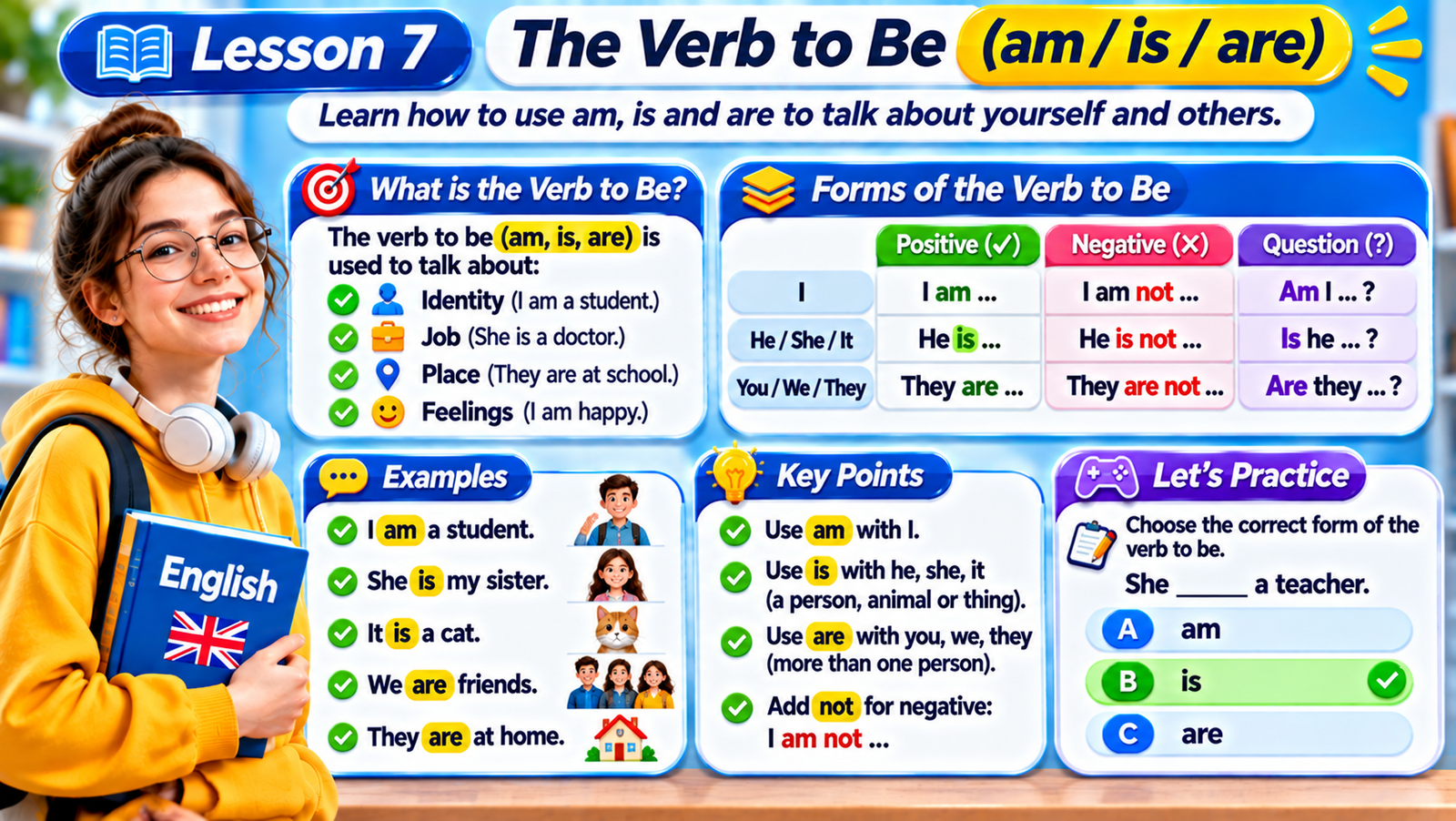
Illustration for The Verb To Be: Am, Is and Are in English

Learning goals

The verb be is one of the most useful English verbs. It helps you say who you are, where something is, how you feel, and what a person or thing is like.

1. Choose am, is or are

SubjectVerbExample
IamI am ready.
He / She / ItisShe is a doctor.
You / We / TheyareThey are at home.

Remember: I am, he is, they are. The verb changes with the subject.

2. Positive sentences and contractions

In conversation, we often shorten the verb: I am → I’m, you are → you’re, he is → he’s, she is → she’s, it is → it’s, we are → we’re, they are → they’re.

Compare “She is happy” and “She’s happy.” Both are correct. Contractions are common in speech and informal writing.

3. Make negative sentences

Add not after am, is, or are: “I am not tired.” “He is not late.” “We are not hungry.” Common forms include isn’t (is not) and aren’t (are not). “I’m not” is natural, but “amn’t” is not standard in most everyday English varieties.

4. Ask yes/no questions

Put am, is, or are before the subject: “Are you ready?” “Is she at school?” “Am I early?” Answer with a short response: “Yes, I am.” “No, she isn’t.” “Yes, they are.” Do not say “Yes, I’m” as a complete short answer.

5. Describe people, places and feelings

Identity: “I am a student.” Location: “The keys are on the desk.” Feeling: “We are excited.” Description: “The room is quiet.”

Dialogue:
A: Are you new here?
B: Yes, I am.
A: Is your sister here too?
B: No, she isn’t. She is at home.

6. Common mistakes and independent practice

  • Incorrect: She are a teacher. Correct: She is a teacher.
  • Incorrect: They is here. Correct: They are here.
  • Incorrect: You happy? Correct: Are you happy?
  • Incorrect: I no am tired. Correct: I am not tired.

Write: Three positive sentences, two negative sentences and two questions using be. Read each question and give a short answer.

Self-check and next step

Listen to the examples once at normal speed and once slowly. Complete the quiz without looking back, then replay any phrases you found difficult. Finish with the matching game and write two original sentences using today’s language.

Listen, Practice & Play

Listen to the examples, check your understanding, and match related expressions. Audio uses your device's text-to-speech voice.

Listen & Repeat

Select a sentence to listen.

Knowledge Quiz
Matching Game

Choose one item on the left and its match on the right.

Finished studying this lesson?

Mark it complete to save your progress on this device.
More Beginner lessons

Your progress0 / 10 completed
  1. Lesson 01 •Vocabulary •20 min The English Alphabet: Letters, Sounds and Pronunciation Learn all 26 English letters, vowel and consonant letters, basic pronunciation patterns, spelling, and capitalization with practical examples and a self-check quiz. ✓ Completed
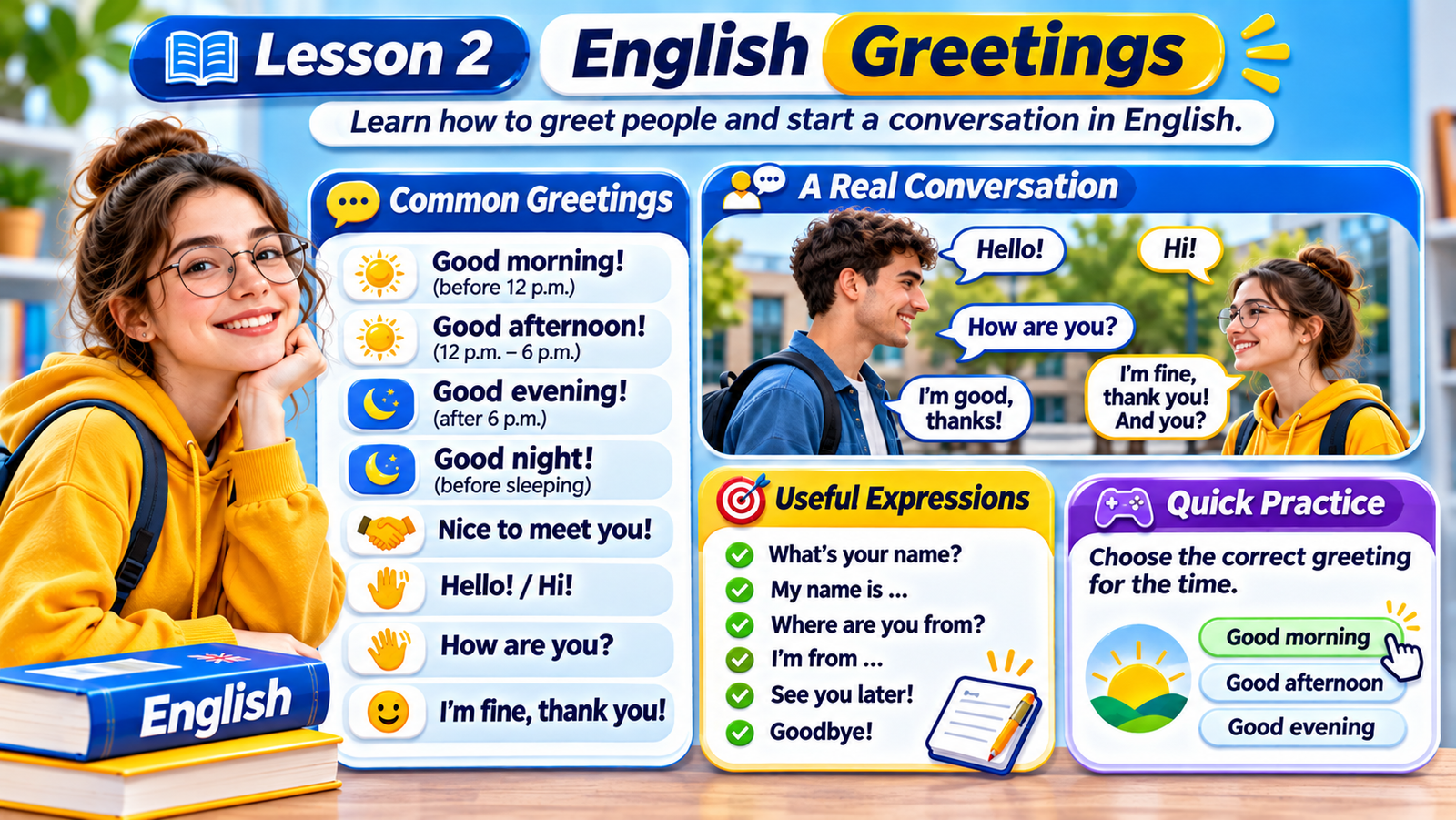
  2. Lesson 02 •Speaking •20 min English Greetings and Introductions: Say Hello and Meet People Learn everyday English greetings, introduce yourself, ask names, respond to How are you, and say goodbye with real dialogues, speaking practice, and a quiz. ✓ Completed
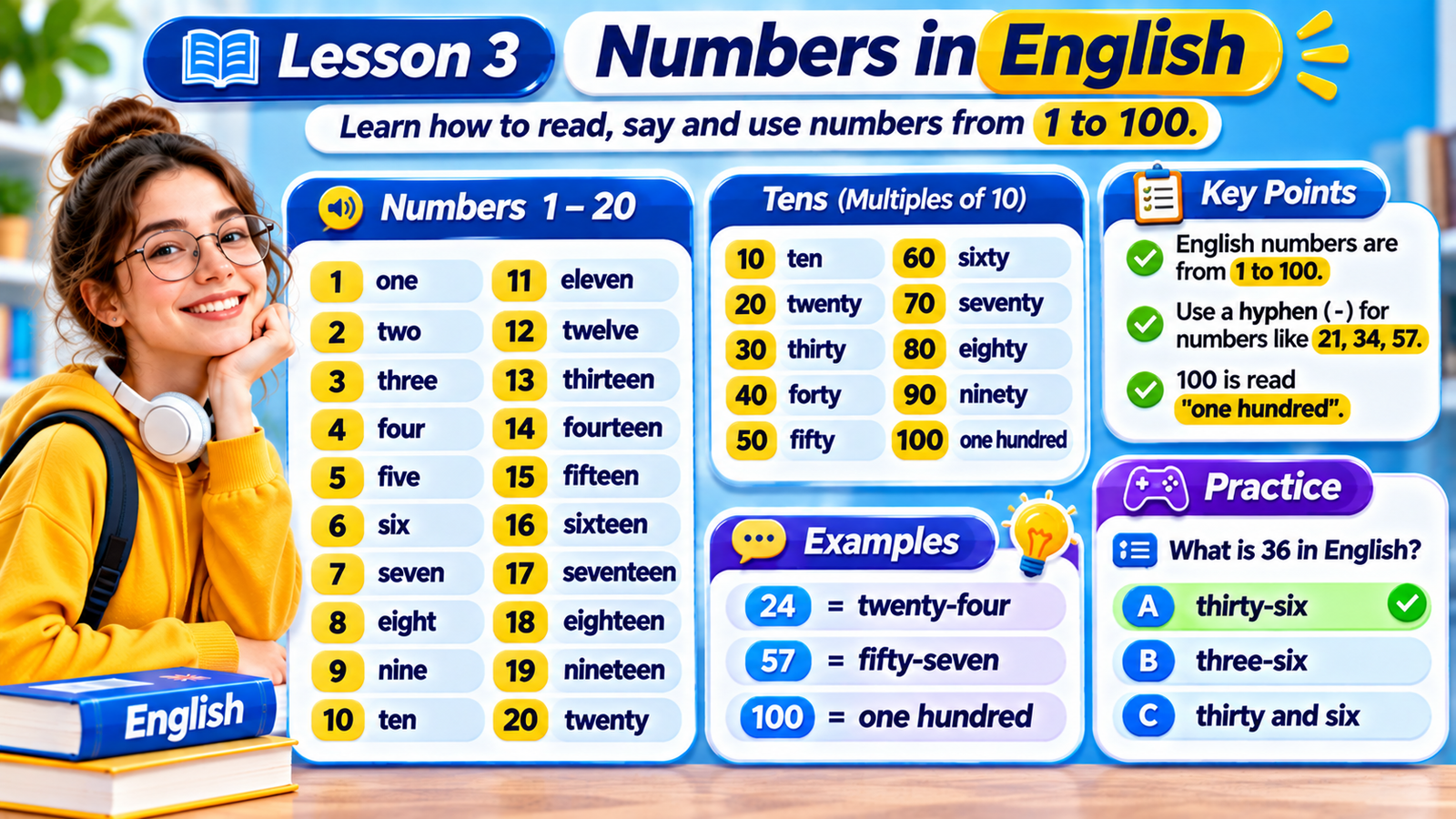
  3. Lesson 03 •Vocabulary •25 min Numbers in English: Count from 1 to 100 Learn to count from 1 to 100, understand tricky number pairs, say ages and prices, and practise numbers in real conversations. ✓ Completed
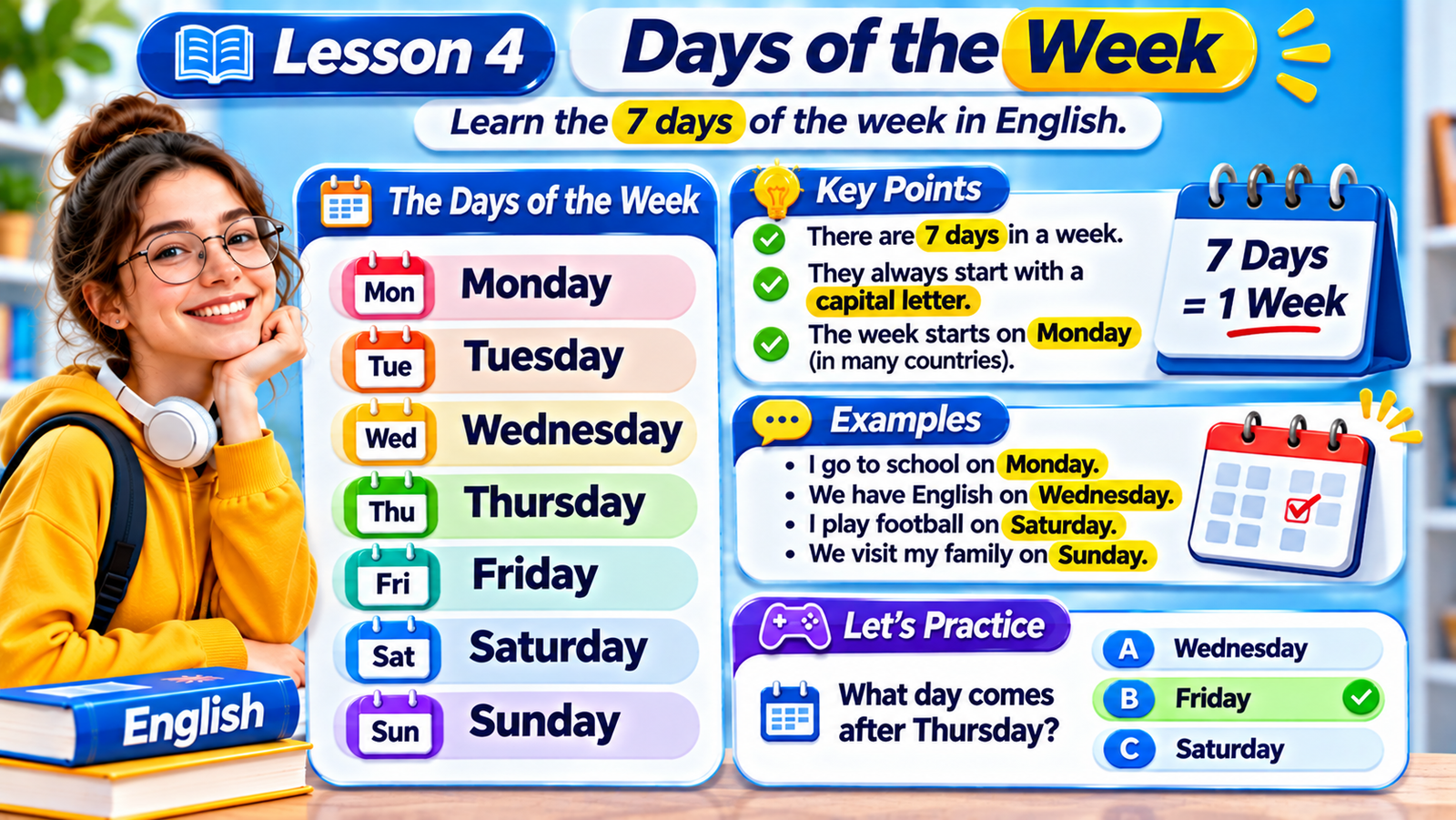
  4. Lesson 04 •Vocabulary •20 min Days of the Week in English: Names, Order and Usage Learn all seven days of the week, correct spelling and capitalization, and how to talk about your weekly routine. ✓ Completed
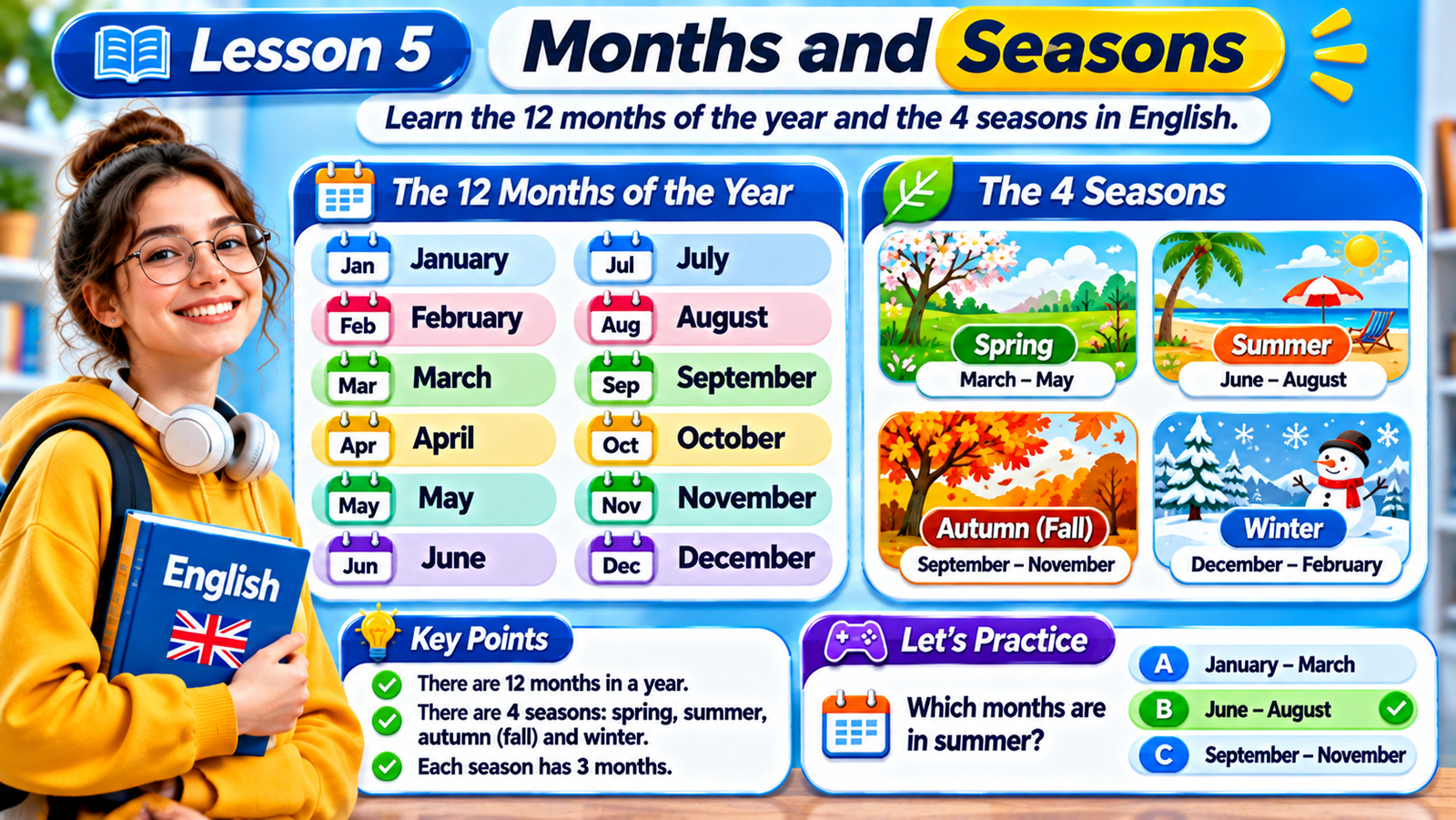
  5. Lesson 05 •Vocabulary •25 min Months and Seasons in English: Dates and Everyday Expressions Learn the 12 months, four seasons, month spelling, dates and natural expressions for birthdays, holidays and weather. ✓ Completed
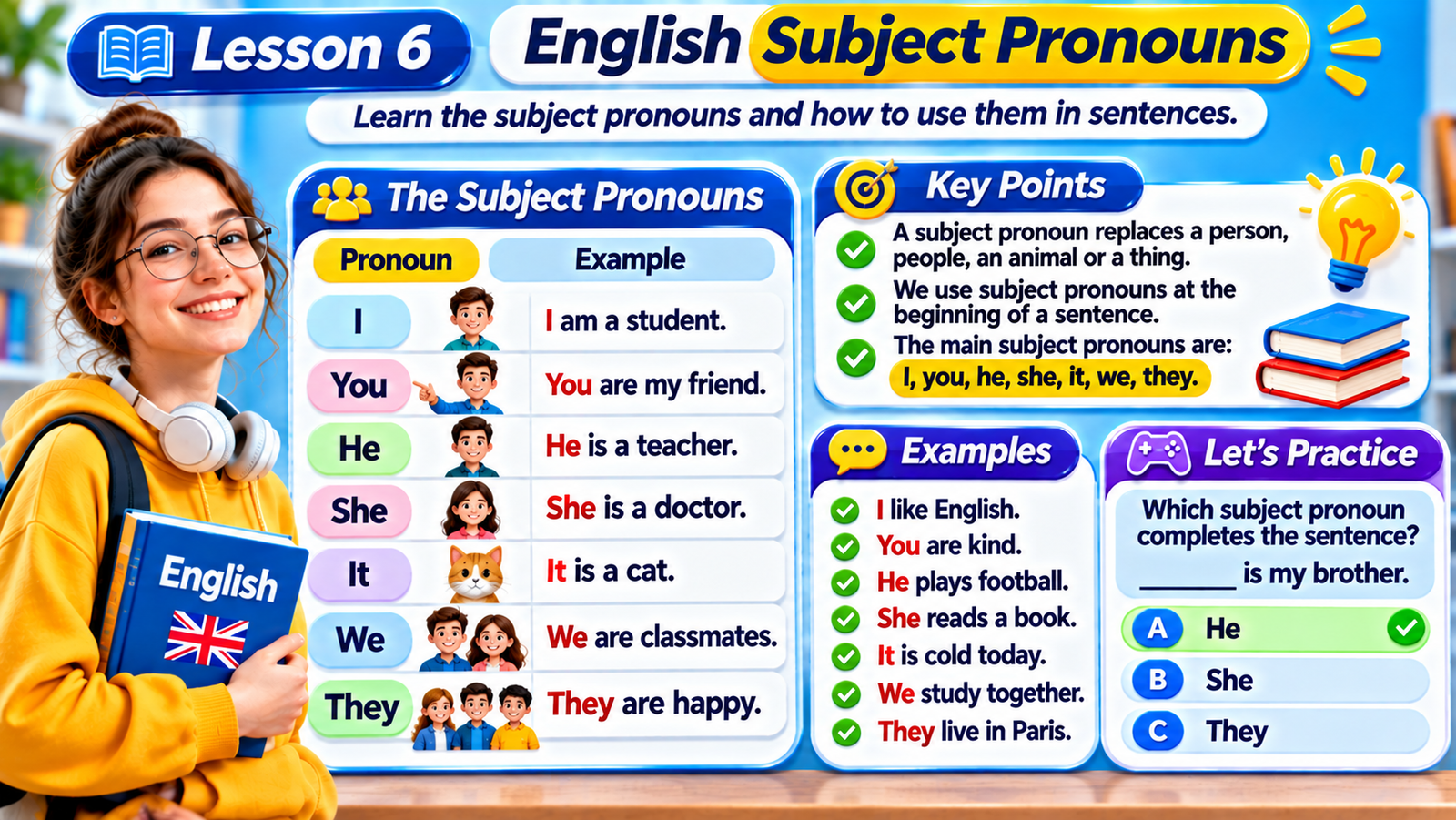
  6. Lesson 06 •Grammar •25 min English Subject Pronouns: I, You, He, She, It, We and They Understand the seven English subject pronouns, replace nouns correctly, and practise natural sentences and short conversations. ✓ Completed
  7. Lesson 07 •Grammar •30 min The Verb To Be: Am, Is and Are in English Learn am, is and are in positive sentences, negatives, questions and short answers, with examples and practice. ✓ Completed
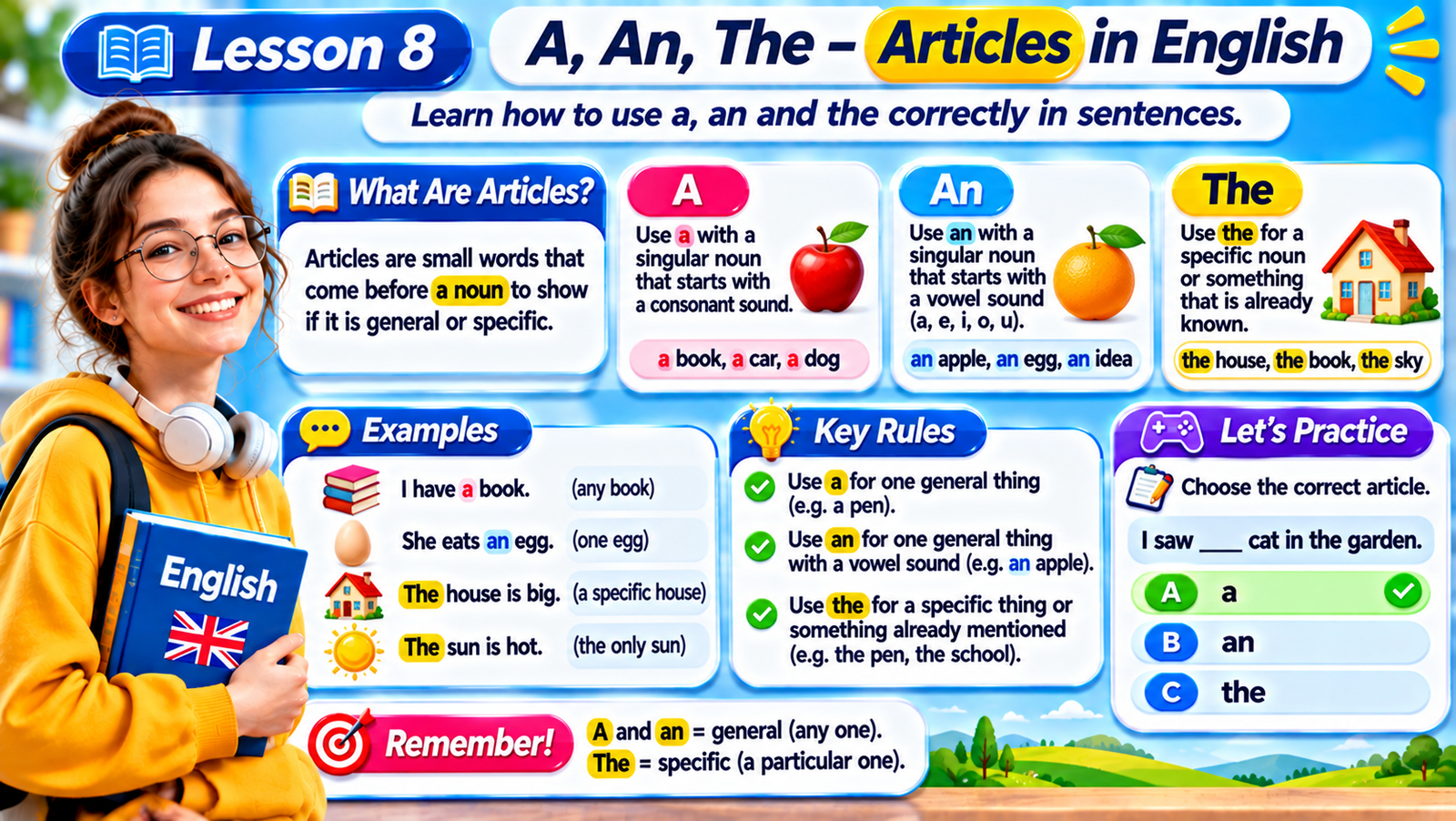
  8. Lesson 08 •Grammar •30 min A, An and The: English Articles for Beginners Use a, an and the naturally with singular nouns, sounds, familiar things and everyday examples. ✓ Completed
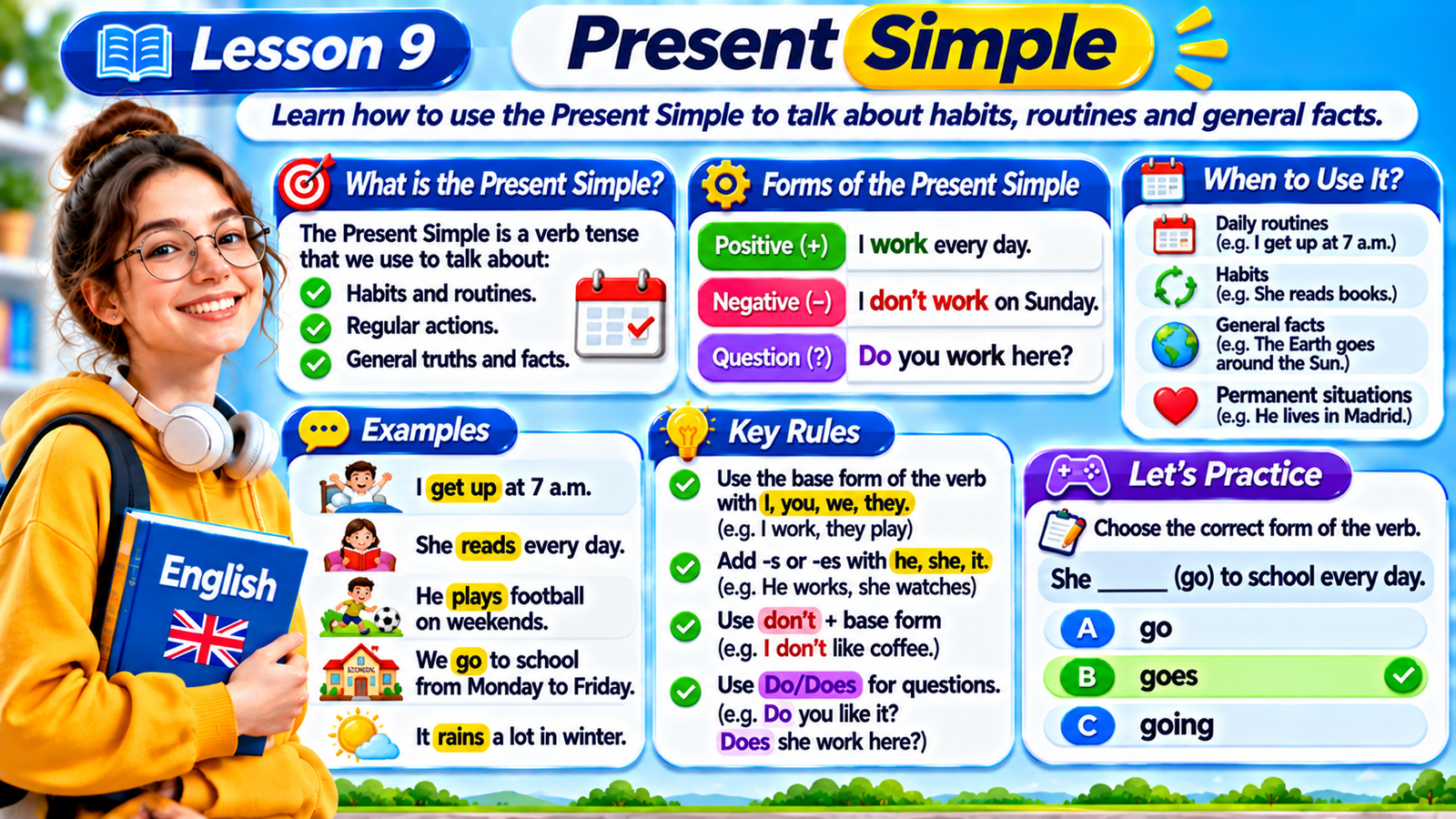
  9. Lesson 09 •Grammar •35 min Present Simple: Daily Routines and Habits Learn the present simple for habits, daily routines and facts, including he/she/it endings and time expressions. ✓ Completed
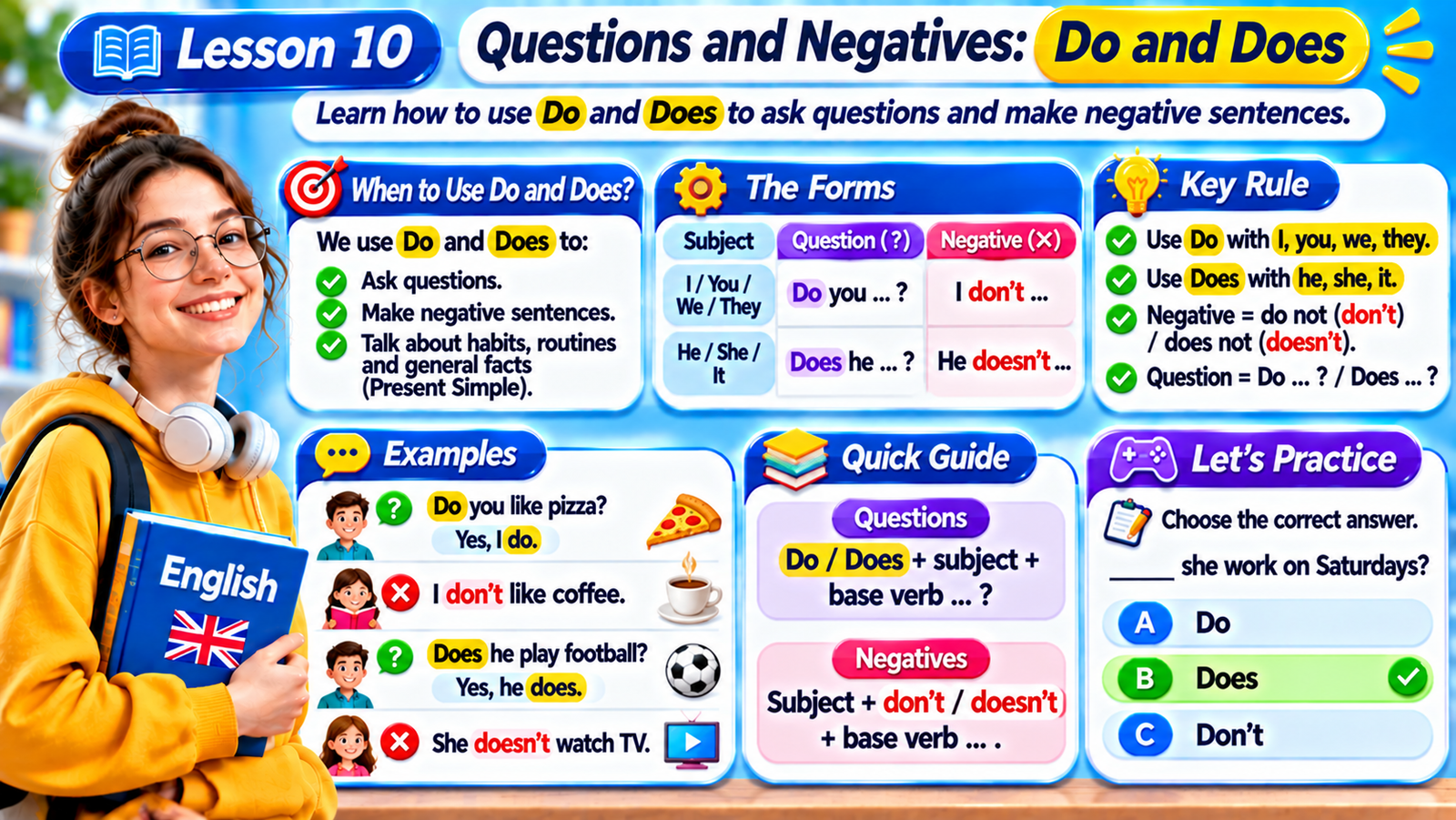
  10. Lesson 10 •Grammar •35 min Present Simple Questions and Negatives: Do and Does Ask present simple questions, form negatives with do not and does not, and give accurate short answers. ✓ Completed